CaSi vs CaFe Cored Wire: Choosing a Calcium Treatment
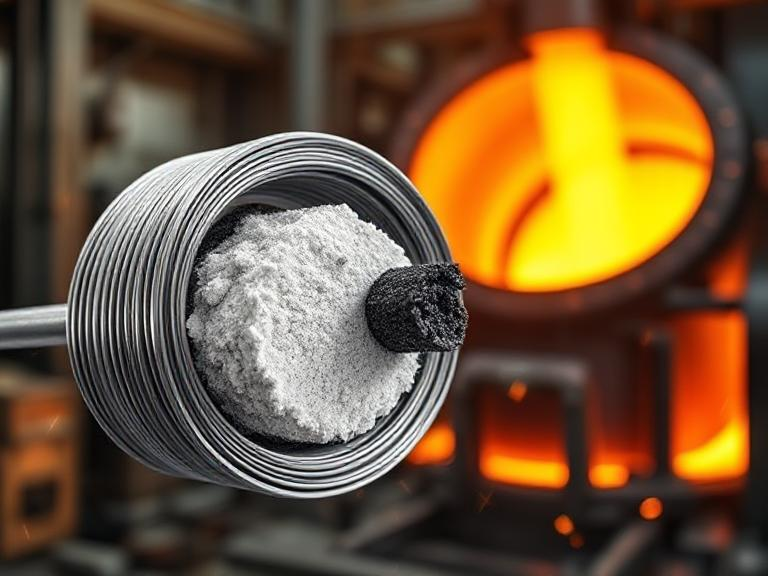
Both deliver calcium for inclusion modification. The decision usually turns on whether your grade can accept the silicon that comes with CaSi.
 EXCELLENCE IN
Practical writing on ferro alloys and steelmaking — grade selection, deoxidation practice, ladle treatment, foundry inoculation and what belongs on a purchase order. Written by the people who make and ship the material.
Both deliver calcium for inclusion modification. The decision usually turns on whether your grade can accept the silicon that comes with CaSi.
These two are not competing grades of the same product. They do different jobs, and the silicon is the reason.
The two grades differ by about five points of silicon, which sounds trivial and is not. Comparing them on price per tonne is the mistake that costs money.
Every alloying element earns its place by changing a specific property. Understanding which does what makes specification decisions much simpler.
Most ferro alloy disputes trace back to a purchase order that specified only the alloy name and a tonnage. Here is what a complete specification looks like.
Cored wire puts reactive elements exactly where you want them, deep in the ladle. It is the difference between a controlled treatment and an expensive cloud of fume.
Inoculation is a short-lived effect. Getting the type, the amount and above all the timing right is what separates a sound casting from a chilled edge.
Dissolved oxygen ruins steel. Ferro silicon is the most common way to remove it — but recovery varies widely depending on how and when you add it.
Both deliver manganese, but they behave differently in the ladle. The choice usually comes down to whether you also need silicon, and what your slag chemistry will tolerate.
HC, MC and LC ferro chrome are not interchangeable. The carbon content decides which steels you can make with them, and it drives most of the price difference.